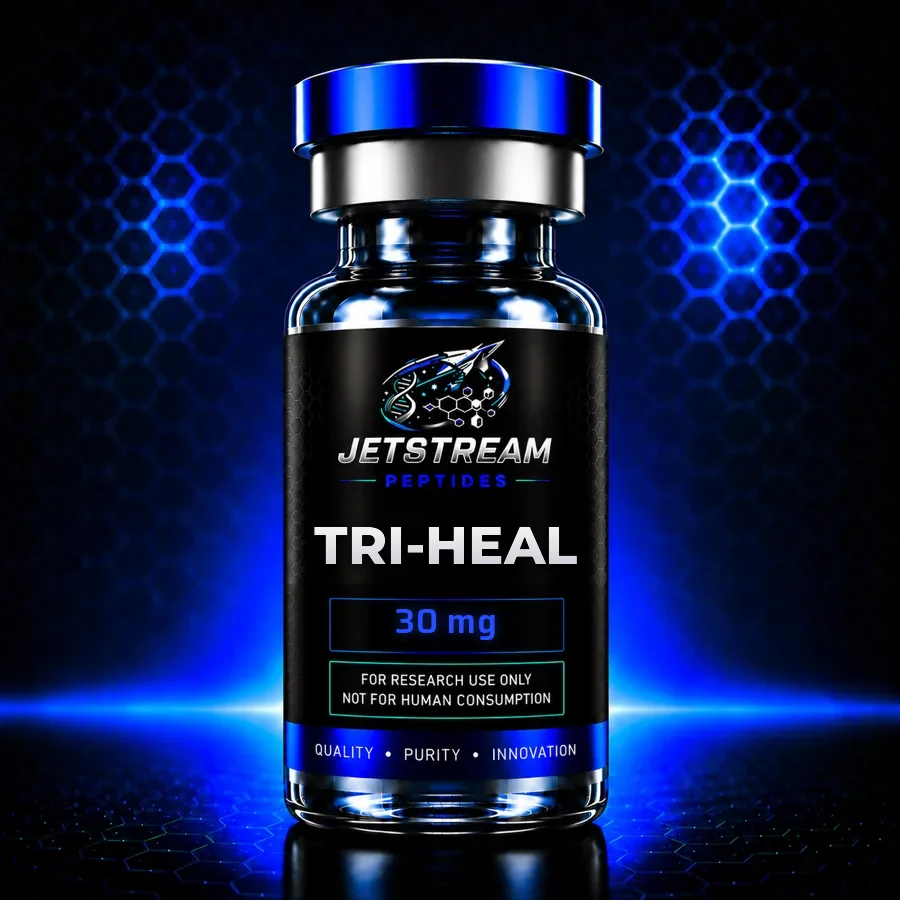
Tri-Heal
$65.00
Research blend of BPC-157, TB-500 and KPV for multi-pathway tissue repair and inflammation-signaling studies.
- Purity
- >99%
- Testing
- 3rd-party
- Shipping
- Tracked, discreet
1 lab report (COA) available for this product.
About Tri-Heal
Triple-action tissue repair and anti-inflammatory blend. Systemic healing, angiogenesis, and gut-immune axis research.
TriHeal is a triple-component research blend combining BPC-157, TB-500, and KPV across complementary and synergistic tissue repair, angiogenic, and anti-inflammatory pathways. BPC-157 (Body Protection Compound-157) is a synthetic pentadecapeptide derived from human gastric juice with well-characterized cytoprotective, angiogenic, and tendon-to-bone healing properties, acting through the nitric oxide system, VEGFR2 signaling, and FAK-paxillin pathway modulation to accelerate tissue repair across musculoskeletal, gastrointestinal, and vascular compartments. TB-500 (Thymosin Beta-4 fragment) is the actin-sequestering LKKTETQ domain peptide of Thymosin Beta-4, promoting satellite cell activation, endothelial cell migration, MMP upregulation, and extracellular matrix remodeling in response to tissue damage. KPV (Lysine-Proline-Valine) is a C-terminal tripeptide of alpha-MSH with potent anti-inflammatory activity mediated through NF-κB pathway inhibition and melanocortin receptor engagement, with particular efficacy studied in gastrointestinal inflammatory models including colitis. Together, the three components address distinct but overlapping aspects of the healing cascade — BPC-157 driving systemic and GI cytoprotection and vascular repair, TB-500 promoting cellular migration and matrix remodeling, and KPV suppressing the inflammatory microenvironment that impedes tissue regeneration — making TriHeal a research platform for investigating multi-mechanism tissue repair co-administration strategies.
Research applications
- Multi-mechanism tissue repair: BPC-157 angiogenesis, TB-500 matrix remodeling, and KPV anti-inflammatory pathway research
- Gastrointestinal cytoprotection, mucosal repair, and NF-κB-mediated gut inflammation suppression studies
- Musculoskeletal repair, tendon-to-bone healing, and satellite cell-mediated tissue regeneration pathway investigation
- Extracellular matrix remodeling, MMP upregulation, and endothelial cell migration research in wound healing models
- Synergistic anti-inflammatory and cytoprotective co-administration outcome research versus single-compound controls
Lab reports (COA)
Independent third-party test results for Tri-Heal, newest first.
| Batch | Tested | Lab | Purity | Report |
|---|---|---|---|---|
| LQC-9002 | — | Group test | 99.56% | View COA |